The TyPod Project
Introduction
I got a hand me down iPod when I was about 8 years old. It was one of the older ones with the scroll wheel and the 30 pin charging port. But I didn't care that it didn't have a ton of games or a camera, I thought it was the coolest thing in the world and this was definitely one of my childhood events that made me interested in the tech space. This was before I had any idea that I could buy a song online and put it on the iPod so I would use iTuned to get the music off my dad's CDs and put them onto it.
Fast forward to 2026, I found my iPod in a drawer when I was going through my room and I though, "I could probably make something like this!". So I did. I call it the TyPod! Is it slim and sleek? Of course not! Does it have the best sound quality rivaling todays iPhones? Not even close! But it's my own. Built with parts I picked out, designed by me and coded by me. So without further ado, I present the TyPod...
The Idea
The best way to start any project weather it be software or hardware is to ask yourself, "What do I want it to do?". In my case, I wanted it to play all of my songs while running off of 2 AA batteries. This was for a couple of reasons, I had already designed a 3D printed AA battery enclosure (wrote about it here). I wanted it to be portable on its own. My perfbaord game was compact (article about that here), the only problem is that to use it, it needs to be plugged into a power source over USB-C. So What do I want the TyPod to do? It should be a device that runs on 2 AA batteries and plays my music.
Mental Sketch
Now that I have the idea it's good to think through how it will work. I need somewhere to store the songs. Some android phones user Micro SD cards. The Raspberry Pi even runs off of one. So I found a SD card module on Amazon. Now the card reader its self cannot execute code so I need something as the brain. I choose the ESP32 because I still have a few left and they work great with Micro Python which was my chosen language since I am more familiar with Python then I am with languages like Go, C or C++. But I know from past experience that the ESP32 can be kinda finicky when it doesn't get enough voltage. The device I used to fix this is called a step up converter. It has a screw on the side you can twist to adjust how much of the power being pushed through can be turned into voltage (which is the actual pushing force in this case.). Great, now how do I listen to it? I discovered that I would need something called a DAC, which would convert the 1's and 0's from the music files into audible sound. I opted to get one that had a headphone jack built on to the module to 1: save space on the board, 2: save me money, and 3: less wiring and soldering for me.
Bread Boarding
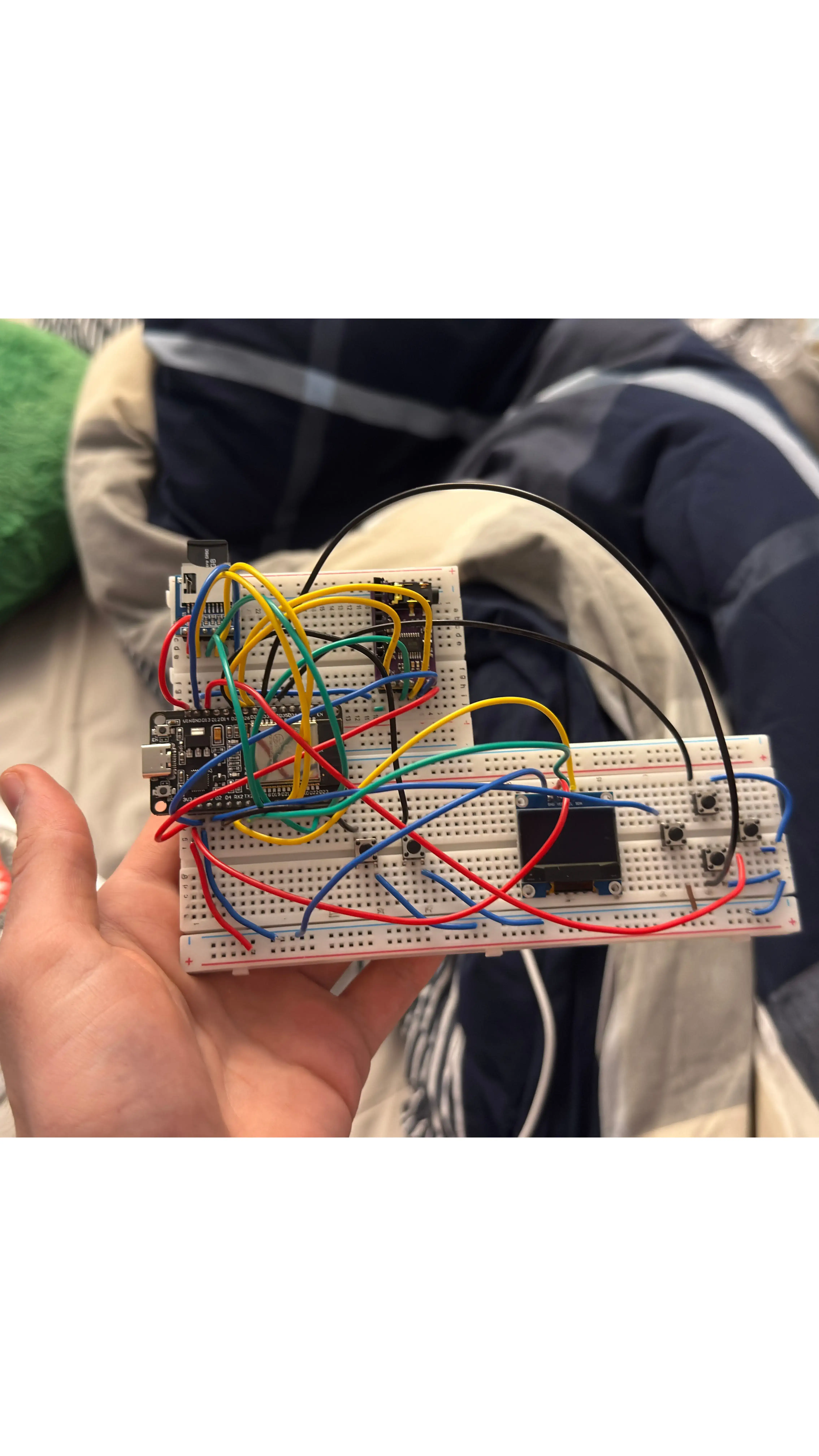
I always work on a bread board first to make sure that all of my code works with how I have wired my device. I will often keep the bread board assembled and use it as a reference while building and soldering the perfboard (another great reason to buy parts in bulk!). I wired all the different modules to the ESP32 across 1 and a half bread boards (see picture bellow.).
Production
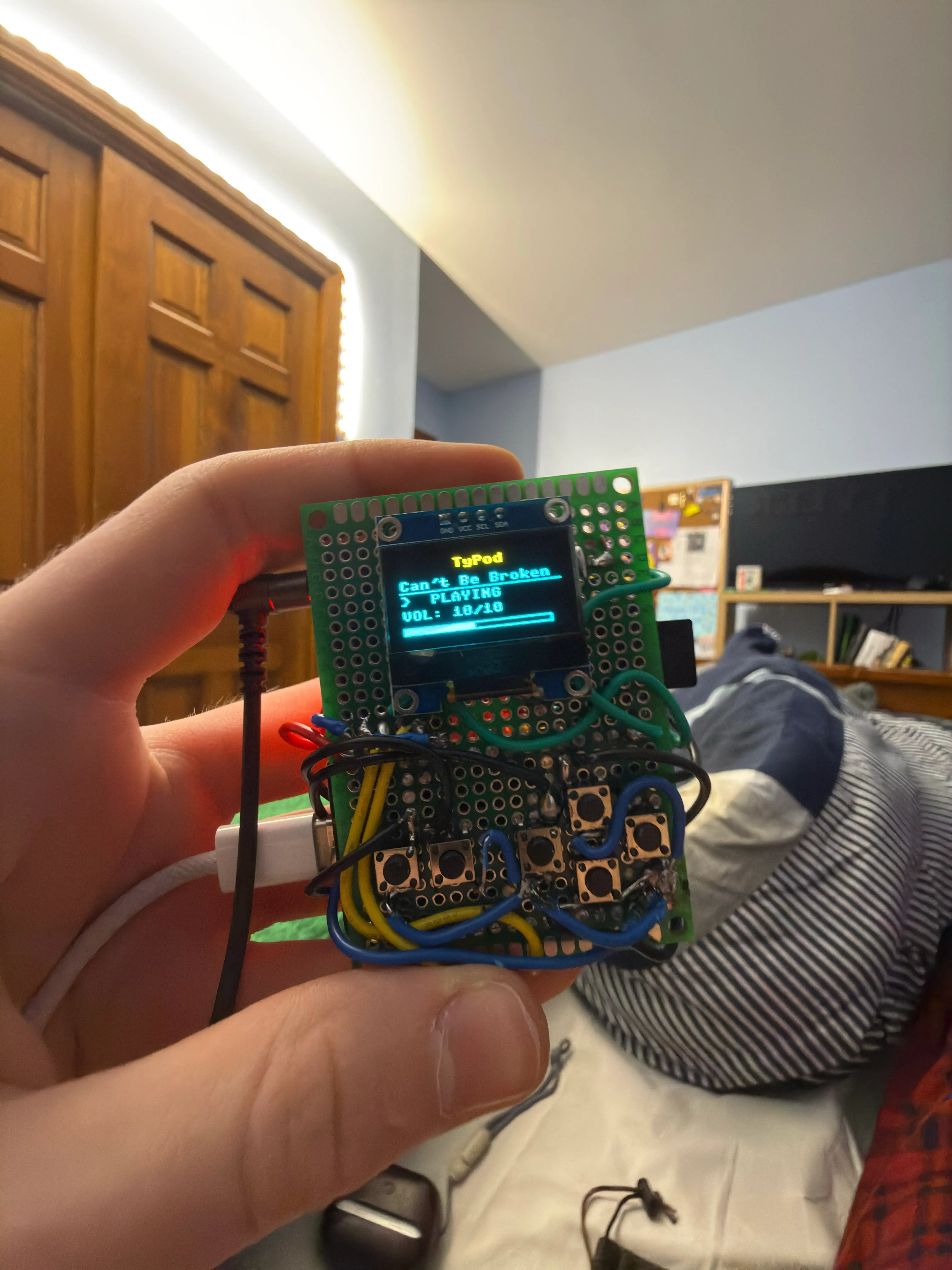
I was overjoyed when I discovered that it actually worked. From scratch, I had designed a device that would play music that I loaded onto it using micro SD card. This was the hardest part, just wiring it up into a barely held together mess of wires. Now the fun part starts... Soldering! I replaces the ESP 32 on the bread board with another one that I had that had the same pin out so that I could use my bread board as a reference. It took me about 3-4 hours to completely solder down every single component. Though I had one problem, it still was not yet powered by batteries like I wanted it to be.
The Final Steps
I needed a way to fit the batteries and the step up converter board into the design so I went on to Tinker CAD and started designing the enclosure for the finished perfboard. I took the AA battery enclosure I had already designed (I wrote another blog post about that project!) and imported it into a new design. I measured the size of the perfboard and decided that it would be easier to glue stand off screws into place instead of trying to line up the holes perfectly with the ones on the perfboard. I was also originally going to put a face plate over the front wires to make it look nicer but I decided that it would look more DIY if I left it exposed.
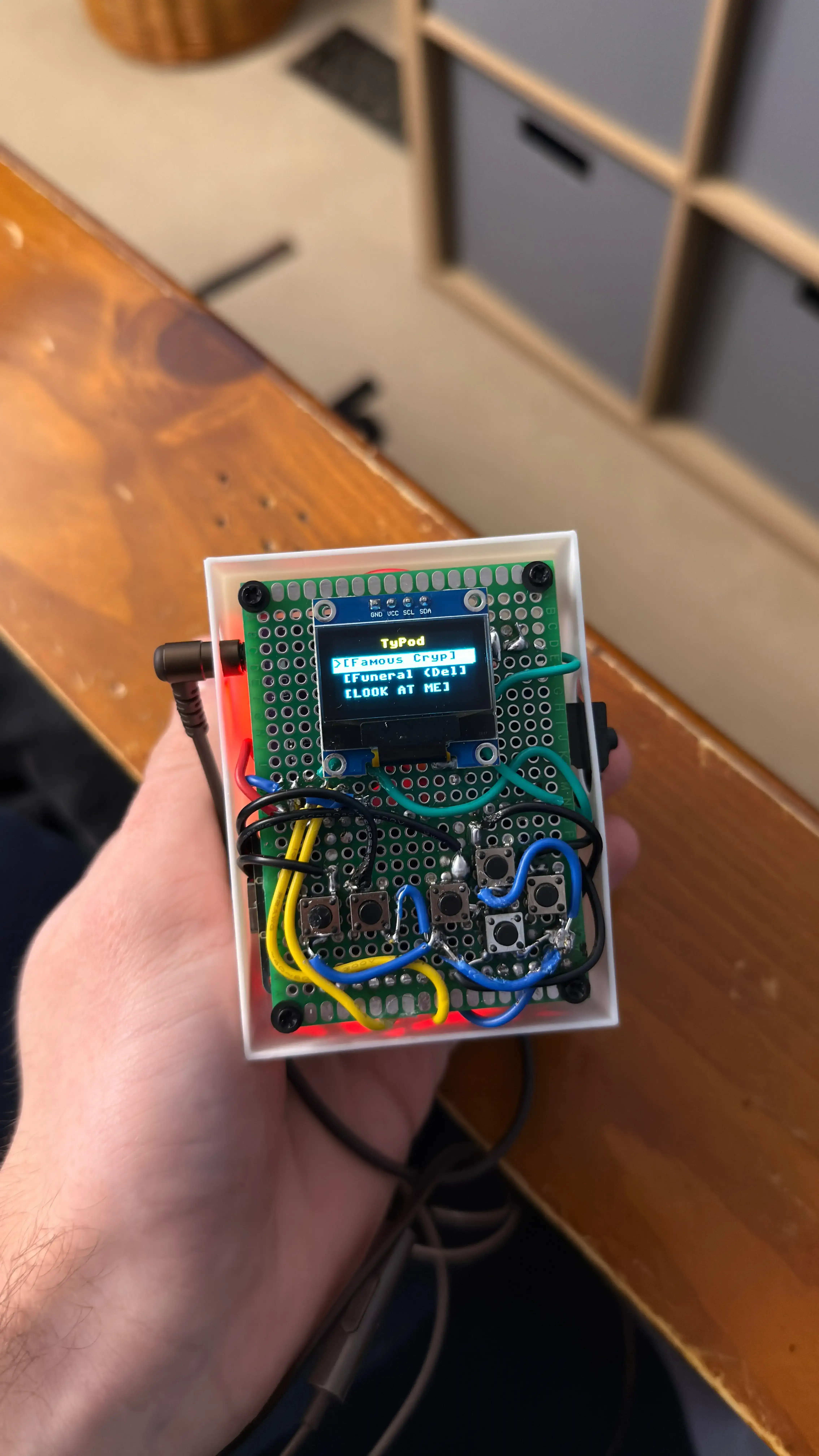
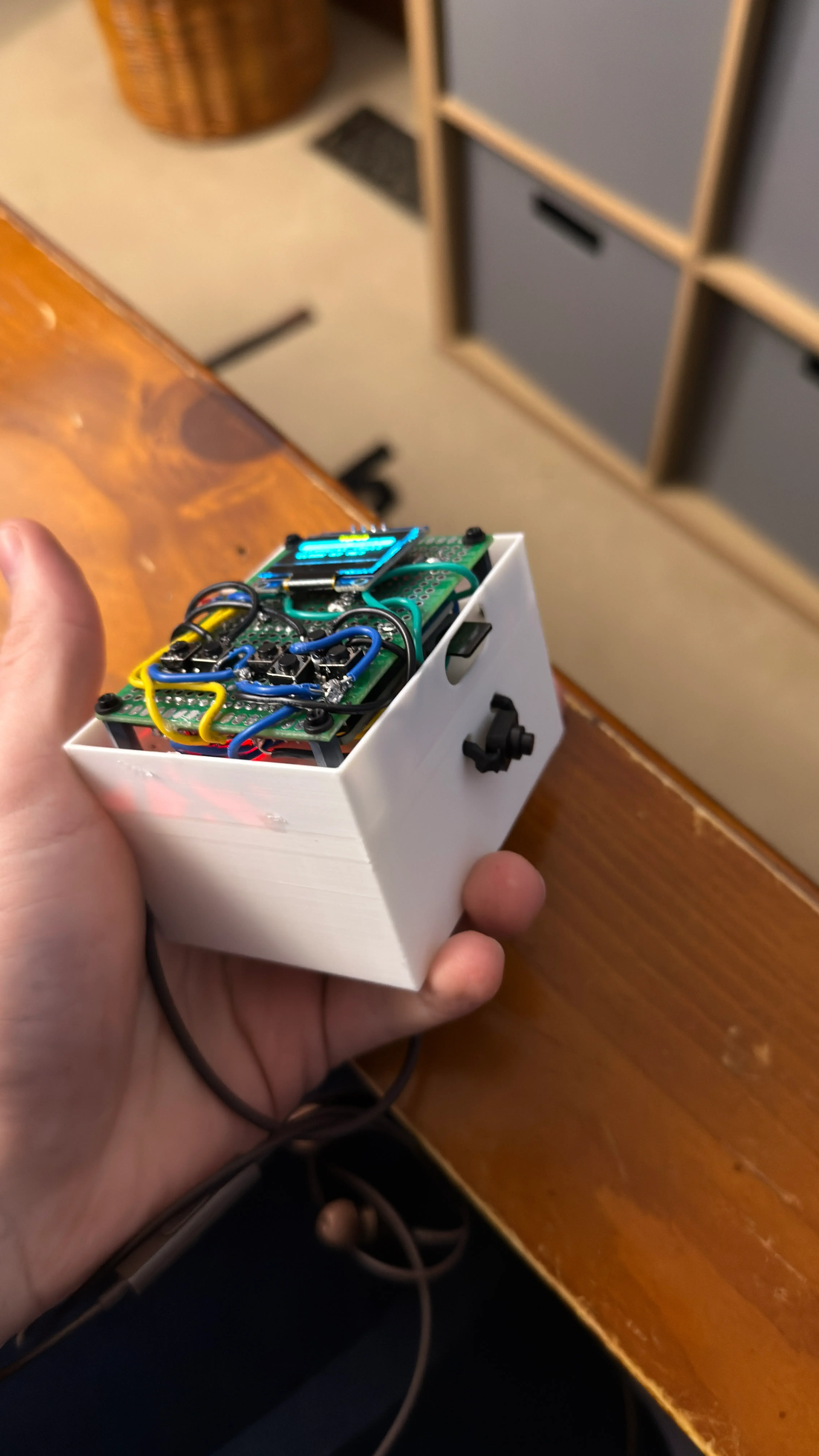
In the back of the enclosure there was a slot for the AA battery compartment and under that I fit the step up converter and pushed the wired through the a hole I added between the 2 compartments so they could connect to sockets I added to the perfboard. You can see the finished project in the 2 images below.
What This Project Taught Me
I think that this is the coolest project I have done so far, it works amazingly well and it was nice that it was inspired from something from my childhood. I learned a lot about sizing the holes right when 3D printing something. Specifically I learned that I need to make them oversized instead of trying to line them up perfectly with the holes for things like the headphone jack or the micro SD card slit. This time it only took one failed print to figure out what I needed to modify and after that it came out perfect.
This has been my favorite project that I have done so far and I like that it is practical and something I can use daily.
Thanks for reading,
Tyler :)